
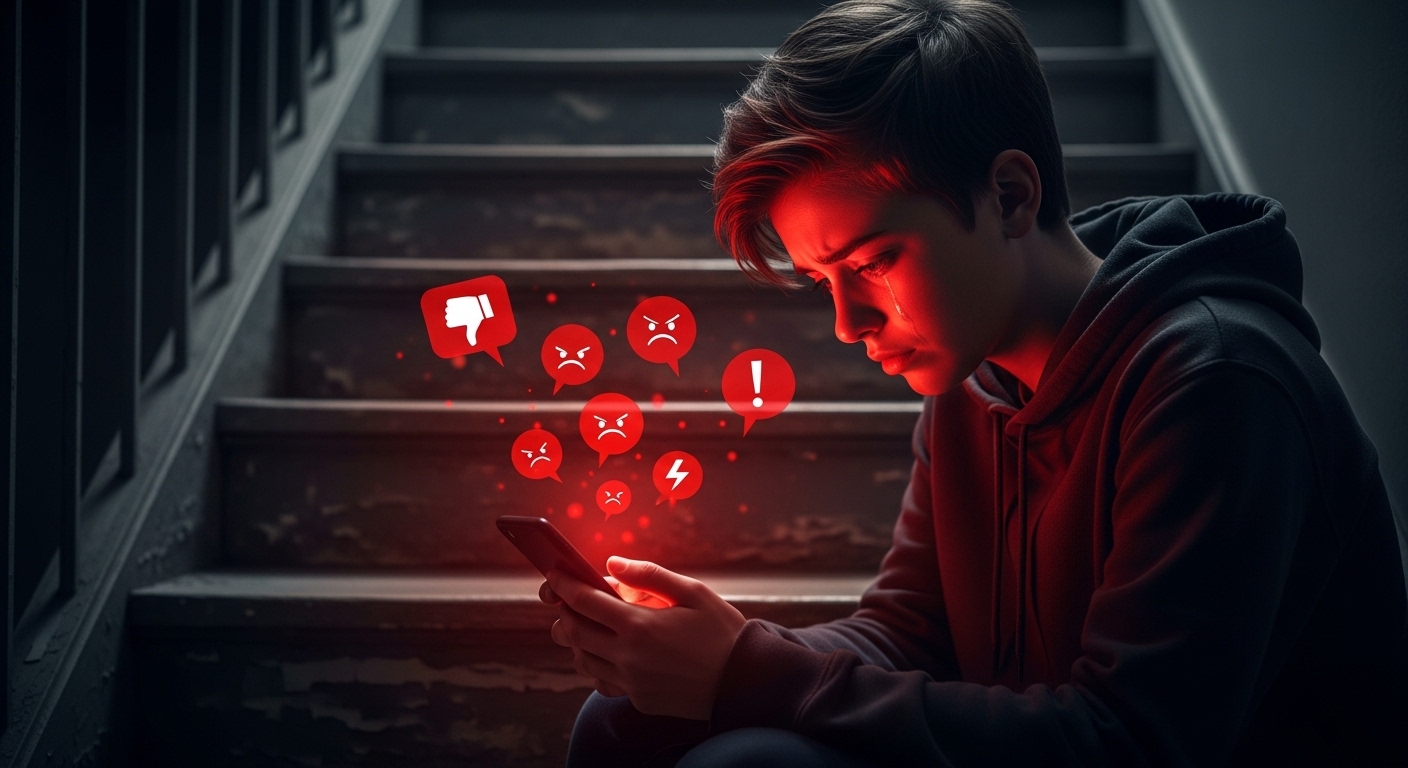
Do you remember what bullying looked like when you were in school? It usually involved a physical confrontation in the hallway, a cruel note passed in class, or being deliberately excluded from a lunch table. It was painful, yes, but it had clear boundaries. When the school bell rang at 3:00 PM, you went home, locked the door, and the bullying stopped. You had a safe haven.
For children growing up in 2026, that safe haven no longer exists.
Today, the bully does not wait in the hallway; the bully lives inside your child’s pocket. It vibrates on their nightstand at 2:00 AM. It follows them on weekends, holidays, and family vacations. The modern bully does not need to be physically stronger or older; they just need an internet connection and a keyboard.
This is the devastating reality of Cyberbullying.
Because social media platforms and messaging apps offer anonymity, children and teenagers are often far crueler online than they would ever dare to be in person. A single embarrassing photo, a fabricated rumor, or a cruel meme can be shared with thousands of peers in a matter of seconds. For the victim, the public humiliation feels inescapable, permanent, and completely overwhelming.
The psychological toll of cyberbullying is catastrophic, leading to severe anxiety, clinical depression, and in tragic cases, self-harm.
As a parent, you cannot physically stand between your child and a digital attacker. However, you are far from powerless. By understanding how modern digital harassment works, learning to spot the subtle warning signs, and knowing exactly how to intervene without making the situation worse, you can become your child’s strongest digital shield.
In this comprehensive guide, we will explore the landscape of cyberbullying in 2026 and provide you with a clear, actionable roadmap to protect your child’s mental health and put an end to the harassment.
Understanding the Modern Tactics of Cyberbullying
Cyberbullying is not just sending mean text messages. It has evolved into a highly complex, multi-platform psychological attack. To help your child, you first need to recognize the tactics being used against them.
1. The “Dogpile” (Public Shaming)
This occurs on public platforms like TikTok or Instagram. A bully will post a humiliating video or a cruel comment about a victim. Suddenly, dozens of other students join in, leaving hundreds of hateful comments. The victim feels as though the entire world is attacking them simultaneously.
2. Doxing and “Receipts”
Doxing involves a bully finding deeply private, sensitive information about a child (such as their home address, private medical history, or a secret they confided in a friend) and publishing it publicly online for everyone to see. In teen culture, exposing someone’s secrets with screenshot proof is often referred to as “dropping receipts.”
3. Impersonation (Catfishing and Fake Profiles)
A highly damaging tactic involves the bully creating a fake social media profile using the victim’s name and photos. The bully then uses this fake profile to post offensive content, send inappropriate messages to classmates, or start arguments, intentionally ruining the victim’s real-life reputation.
4. Exclusion (The Digital Cold Shoulder)
Bullying isn’t always active; sometimes it is passive. Exclusion involves deliberately leaving a child out of digital social gatherings. This could mean intentionally creating a group chat without them, or hosting a multi-player online gaming session and refusing to send them the invite link, ensuring they feel isolated and unwanted.
(Understanding these tactics is crucial. We highly recommend reading our related guide on The Top 5 Dangers Kids Face on Social Media to build a comprehensive view of the online landscape).

The Silent Alarms: 7 Signs Your Child is a Victim
Children rarely volunteer the information that they are being cyberbullied. They stay silent out of shame, fear of retaliation from the bully, or the overwhelming terror that if they tell a parent, their phone and internet access will be taken away.
Therefore, it is up to the parent to play detective. Look for these subtle, silent behavioral changes:
- The “Post-Screen” Mood Swing: Pay close attention to how your child acts immediately after using their phone or tablet. If they suddenly become irritable, aggressive, or deeply sad after reading a text or closing a social media app, it is a massive red flag.
- Hiding the Screen: Does your child jump, quickly lock their phone, or tilt the screen away when you walk into the room? While some privacy is normal for teenagers, extreme, panicked secrecy usually means they are hiding something painful.
- Sudden Withdrawal from Friends: If your child suddenly stops mentioning their best friends, refuses to go to parties, or makes excuses to skip social events they used to love, they may be avoiding the people who are harassing them online.
- A Drastic Drop in Grades: The anxiety of cyberbullying consumes a tremendous amount of mental energy. If a straight-A student suddenly starts failing exams or frequently asks to stay home sick from school, investigate immediately.
- Changes in Sleep and Appetite: Cyberbullying causes a spike in cortisol (the stress hormone). This leads to insomnia, nightmares, and a sudden loss of appetite or binge eating.
- Deleting Social Media Accounts: If a teenager who previously loved Instagram or Snapchat suddenly deletes their accounts without explanation, they are likely trying to escape a hostile environment.
- The “Phantom” Illnesses: Frequent complaints of stomach aches or headaches, particularly on Sunday nights before the school week begins, are classic physical manifestations of severe psychological stress.
The Parent’s Action Plan: How to Intervene Effectively
If you have recognized the signs and confirmed your child is being cyberbullied, your initial reaction will likely be a surge of intense anger. You will want to immediately call the bully’s parents, confront the school principal, or take away your child’s phone to “protect” them.
Stop. Take a breath.
Reacting impulsively can humiliate your child further and make the bullying exponentially worse. You must handle the situation with extreme care and strategy.

Step 1: Validate and Listen (Do Not Confiscate the Phone)
The very first thing you must do is sit down with your child and listen without interrupting. Validate their pain. Say, “I am so sorry this is happening to you. It is not your fault, and you do not deserve this.” Crucially, promise them that you will not take their phone or internet privileges away. If you confiscate their device, you are essentially punishing the victim, and they will never confide in you again.
Step 2: Document the Evidence (Do Not Delete Anything)
Your child’s first instinct will be to delete the cruel messages or photos to make the pain go away. You must stop them. Before doing anything else, take screenshots of every abusive text, comment, email, and fake profile. Make sure the screenshots capture the dates, times, and the usernames of the attackers. This documented evidence is your ammunition; you will need it if you involve the school or law enforcement.
Step 3: Block and Report (The Digital Wall)
Once the evidence is secured, help your child cut off the bully’s access.
- Block the User: Go into the settings of the specific app (WhatsApp, Instagram, TikTok) and block the bully’s account. This prevents them from sending further messages or viewing your child’s profile.
- Report the Abuse: Every major social media platform has a “Report” button next to a post or comment. Use it. Social media companies have strict anti-harassment policies and will often suspend or delete the accounts of repeat offenders.
(For a deeper understanding of how to secure a device against unwanted contact, review our guide on Setting Up Screen Time Limits and App Blockers).
Step 4: Do Not Retaliate
Never reply to the bully. Do not send an angry message threatening them, and do not encourage your child to “fight back.” Bullies thrive on engagement and reaction. Responding only throws fuel on the fire and gives the bully exactly what they want. Silence is the ultimate disempowerment.
Step 5: Escalate to the Authorities (When Necessary)
If the bullying involves physical threats of violence, extortion, the sharing of sexually explicit images (child pornography), or stalking, the situation has escalated beyond a schoolyard dispute. It is now a crime. Do not contact the bully’s parents in these extreme cases. Take your documented screenshots directly to local law enforcement.
If the bullying is occurring among classmates but does not involve criminal threats, schedule a meeting with the school principal or guidance counselor. Most schools in 2026 have strict, zero-tolerance cyberbullying policies and the authority to discipline students for online behavior that disrupts the educational environment.
Building Resilience: The Road to Recovery
Stopping the harassment is only the first phase. The psychological wounds left by cyberbullying take time to heal. Your child’s self-esteem has taken a massive hit, and your job is to help them rebuild it.
- Encourage Professional Help: There is no shame in therapy. A licensed child psychologist can provide your child with safe, effective coping mechanisms to process the trauma and manage their anxiety. Organizations like the Child Mind Institute offer incredible resources for parents navigating these mental health challenges.
- Focus on Offline Passions: Help your child rediscover their worth outside of the digital world. Encourage them to pursue hobbies they love—whether it is joining a local sports team, learning an instrument, or volunteering. Surrounding them with positive, face-to-face peer groups reminds them that the internet is not the real world.
- Monitor Gently, Not Invasively: While trust is key, a “trust but verify” approach is healthy during the recovery phase. Consider using native family location tools to ensure they are safe when leaving the house. (Learn how to do this correctly in our guide: How to Track Your Child’s Device Location Safely).
Conclusion: You Are Their Safe Haven
Cyberbullying is a dark, complex reality of modern childhood. The internet has given bullies a megaphone that can reach into the most private spaces of a child’s life.
However, as powerful as the digital world is, it can never replace the fundamental, grounding power of a supportive parent.
By paying attention to the subtle shifts in your child’s behavior, keeping the lines of communication fiercely open, and knowing exactly how to document, block, and report abuse, you strip the bully of their power.
You cannot control what other people say on the internet, but you can control how your family responds to it. Be their advocate, be their shield, and remind them every single day that their worth is not defined by a screen.

Munir is a digital security researcher and software reviewer
with over 5 years of experience testing privacy tools, parental
control applications, and cybersecurity software. He founded
Tech Monitor Pro to provide honest, hands-on reviews that help
families and professionals make smarter decisions about the
tools they use online. When he is not testing the latest VPN
or email verification platform, he writes practical guides on
digital safety and online privacy.