
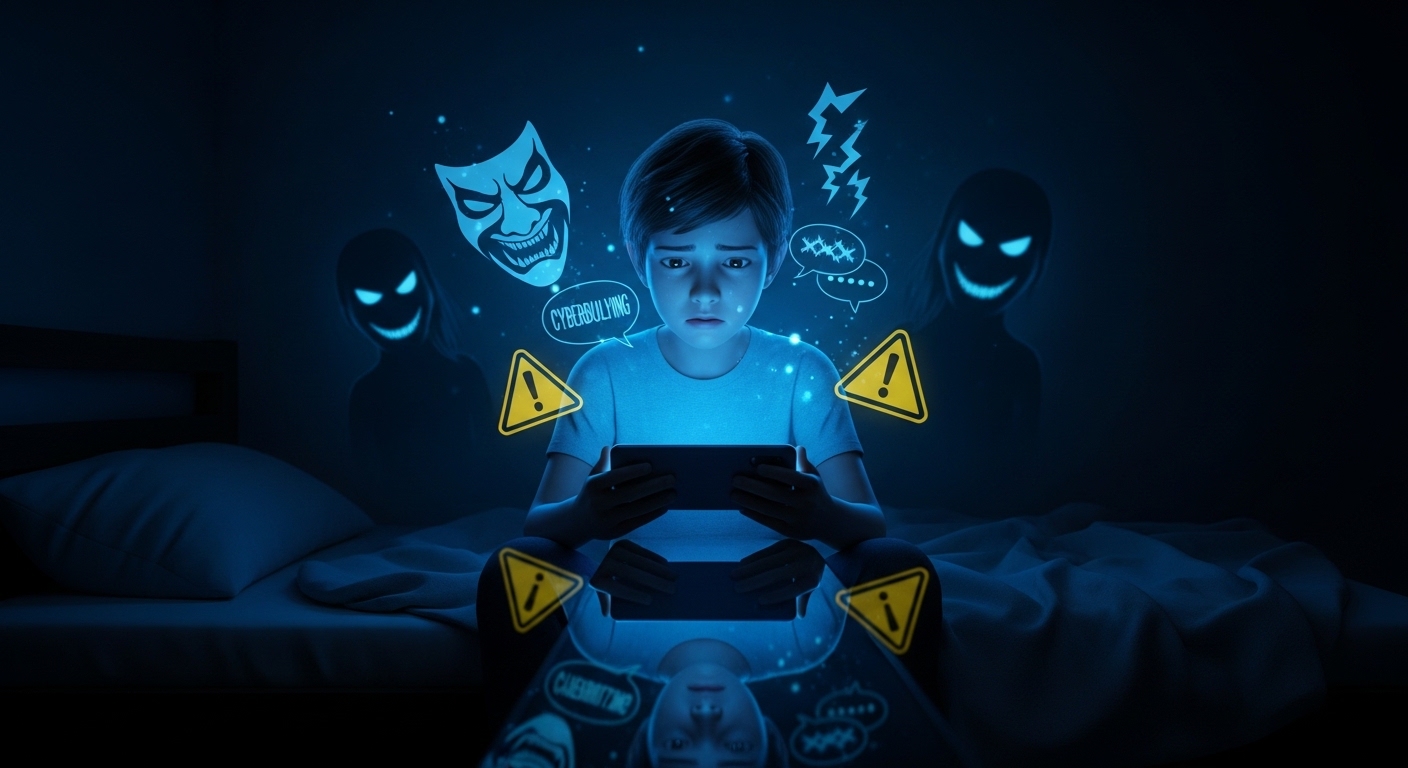
If you took your child to a public park, you would never leave them completely alone for hours with hundreds of total strangers. You would sit on a bench, keep a watchful eye, step in if a bully approached them, and make sure they did not talk to someone they didn’t know.
Yet, millions of parents unknowingly do the exact opposite every single day in the digital world.
When a child logs into Instagram, TikTok, Snapchat, or even online gaming platforms, they are entering the largest, most unpoliced playground in human history. In 2026, social media is no longer just a place to share pictures with school friends. It is a highly complex, algorithm-driven universe designed to keep users hooked for as long as possible.
For children and young teenagers, whose brains are still developing critical thinking and emotional regulation skills, this digital environment is filled with hidden landmines. While the internet offers incredible opportunities for learning and connection, the harsh reality is that the lack of physical boundaries creates severe, life-altering risks.
As a parent, taking away the smartphone entirely is rarely a realistic or sustainable solution. Instead, you need to understand exactly what your child is facing when they stare into that glowing screen.
In this comprehensive guide, we will expose the top 5 dangers kids face on social media today. More importantly, we will provide you with clear, actionable steps to build a digital safety net, ensuring your child can navigate the online world securely and confidently.
Danger #1: The 24/7 Threat of Cyberbullying
In the past, bullying ended when the school bell rang. Once a child arrived home, they were safe behind locked doors. Today, the bullying follows them into their bedrooms, vibrating in their pockets at 2:00 AM.
Cyberbullying is the most pervasive threat facing children on social media. Because the internet offers anonymity—or at least the illusion of it—kids and teens are often far crueler online than they would ever be in person. Cyberbullying comes in many forms: rumors spread via group chats, cruel comments on photos, fake profiles created to mock a specific student, or deliberate exclusion from online events.
The psychological impact of this constant harassment is devastating, leading to severe anxiety, depression, and a sharp decline in academic performance.
How to Prevent It:
- Keep Communication Open: Your child must know they will not be punished (or have their phone taken away) if they tell you someone is bullying them. Fear of losing the device is the number one reason kids stay silent.
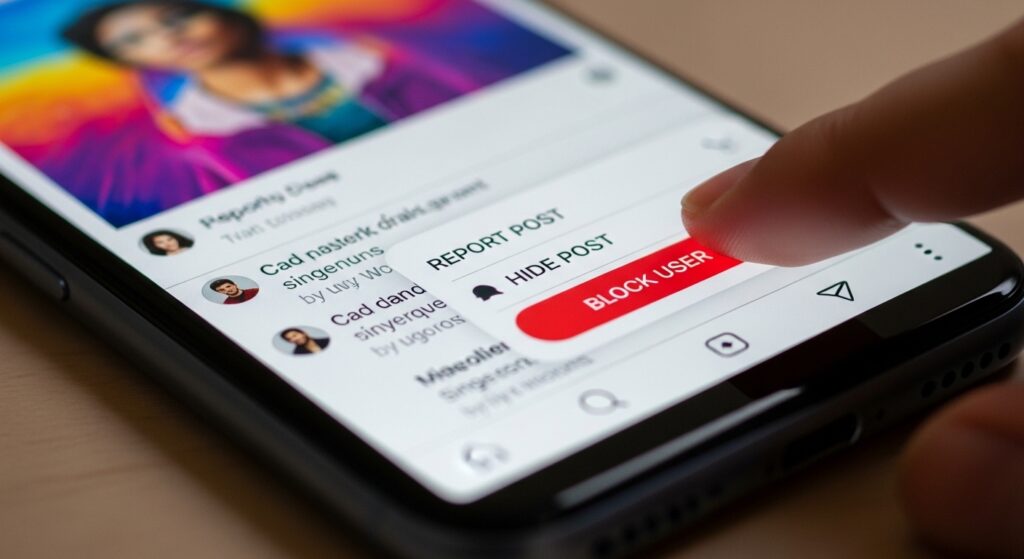
- Teach the “Block and Report” Rule: Show your child exactly how to block abusive accounts and report harmful comments directly to the social media platform.
- Establish Tech-Free Zones: Create rules where phones are left in the kitchen overnight. This guarantees your child gets a break from the digital noise. (Learn how to enforce this automatically in our guide on Setting Up Screen Time Limits).
- External Resource: For professional guidance on handling harassment, visit the government’s official StopBullying.gov resource center.
Danger #2: Online Predators and “Catfishing”
It is a terrifying reality, but social media platforms are hunting grounds for online predators. These individuals use a tactic called “Catfishing”—creating fake profiles with pictures of attractive teenagers or friendly gamers to build trust with a child.
Predators exploit a child’s natural desire for attention and friendship. They often start by bonding over shared interests, like a popular video game or a favorite band. Over weeks or months, they slowly isolate the child from their real-life friends and family, eventually pressuring them to share inappropriate photos, reveal their physical location, or even meet in person.
How to Prevent It:
- Strict Privacy Settings: Immediately switch your child’s social media accounts to “Private.” This ensures that only people they explicitly approve can see their photos or send them direct messages.
- The “Real Life” Rule: Establish a non-negotiable family rule: Your child can only accept friend requests from people they have actually met face-to-face in the real world.
- Monitor Friend Lists: Periodically sit down with your child and ask them who the people on their friend list are. If they cannot identify someone, that person gets deleted.
Danger #3: The Algorithmic Rabbit Hole (Inappropriate Content)
Social media algorithms are designed with one goal: keep the user scrolling. To achieve this, the algorithms constantly suggest new, increasingly extreme content.
A child might start their afternoon watching innocent videos of skateboarding tricks. But because the algorithm wants to keep their attention, it might slowly transition to videos of dangerous stunts, extreme political views, or content promoting self-harm and eating disorders. Before the parent even realizes it, the child has fallen down a dark digital rabbit hole.
Furthermore, explicit content and violent imagery can bypass standard filters, exposing young minds to material they are not psychologically prepared to process.
How to Prevent It:
- Enable Restricted Modes: Platforms like YouTube and TikTok have “Restricted Modes” hidden in their settings that filter out mature content. Turn these on and secure them with a PIN.
- Co-View Content: Spend time watching videos with your child. Ask them what their favorite creators are making. This gives you insight into what the algorithm is feeding them.
- Check the Device for Hidden Apps: Sometimes, the content isn’t on mainstream social media, but on hidden, unmonitored apps. Make sure their device is secure by reading our guide on How to Tell if Your Phone is Infected with Malware or Hidden Apps.
Danger #4: Oversharing and the Permanent Digital Footprint
Children are impulsive. They live in the moment and rarely think about long-term consequences. On social media, this impulsivity leads to oversharing.
A teenager might post a picture of their new house with the street sign visible, share a rant about a teacher, or post an inappropriate joke. They might delete it ten minutes later, but on the internet, nothing is truly deleted.
Everything a child posts contributes to their “Digital Footprint.” In 2026, college admissions boards, future employers, and even financial institutions routinely scan social media profiles. A careless mistake made at age 14 can resurface to ruin a career opportunity at age 24. Furthermore, oversharing location data gives criminals exactly what they need to track a family.
How to Prevent It:
- Disable Location Tagging: Go into your child’s phone settings and turn off Location Services for the camera app and all social media apps. They should never “check-in” to a location while they are still there.
- The Billboard Test: Teach your child this simple rule: If you would not want this photo or comment printed on a massive billboard outside your school or your grandmother’s house, do not post it on the internet.

Danger #5: The Mental Health Crisis and “The Comparison Trap”
Perhaps the most insidious danger of social media is the invisible toll it takes on a child’s mental health. Social media is a highlight reel. Users only post their best, heavily filtered, and most exciting moments.
When a teenager scrolls through their feed, they are constantly comparing their everyday, behind-the-scenes reality to the artificial, perfect lives of influencers and peers. This leads to a phenomenon known as “The Comparison Trap.” It breeds feelings of inadequacy, low self-esteem, and the severe “Fear of Missing Out” (FOMO) when they see friends hanging out without them.
The pressure to get enough “likes” to feel validated causes immense anxiety, completely warping a young person’s sense of self-worth.
How to Prevent It:
- Promote Digital Detoxes: Encourage hobbies that do not involve screens. Sports, reading, art, or family board game nights help ground children in reality.
- Discuss the “Highlight Reel”: Regularly remind your child that social media is not real life. Talk to them about photo editing, filters, and how influencers curate their images.
- Monitor Mental Health: Watch for signs of sudden mood changes, withdrawal from family, or extreme anxiety when their phone battery dies. If you suspect social media is harming their mental health, consider consulting resources like the Child Mind Institute for professional advice.
Conclusion: Parenting in a Digital World
The dangers of social media are real, but they are not unbeatable. You do not have to be a computer programmer or a cybersecurity expert to protect your kids online. You just need to be involved.
The greatest tool in your parental control arsenal is not a piece of software; it is open, honest, and non-judgmental communication. By talking to your children about cyberbullying, explaining the reality of online predators, and teaching them to protect their digital footprint, you empower them to make smart choices.
Set the privacy settings, use screen time limits, and ensure your home Wi-Fi is secure (learn more about network security in our Public Wi-Fi Safety Guide). But most importantly, keep the conversation going. A child who feels supported offline is significantly harder to break online.
we will be publishing deep-dive reviews on industry’s leading third-party monitoring platforms” — but by now those reviews ARE published (mSpy, Parentaler)

Munir is a digital security researcher and software reviewer
with over 5 years of experience testing privacy tools, parental
control applications, and cybersecurity software. He founded
Tech Monitor Pro to provide honest, hands-on reviews that help
families and professionals make smarter decisions about the
tools they use online. When he is not testing the latest VPN
or email verification platform, he writes practical guides on
digital safety and online privacy.