When you scale your digital business to a level where you are managing dozens of advertising accounts, e-commerce storefronts, or crypto wallets, protecting your digital identity becomes your highest priority. You likely already know that hiding your hardware metrics through advanced browser fingerprinting protection is essential.
However, spoofing your hardware is only half of the equation. To truly isolate an account, you must also mask your internet connection. If you run fifty isolated browser profiles but they all connect from the exact same home IP address, the platform’s algorithm will ban them all simultaneously.
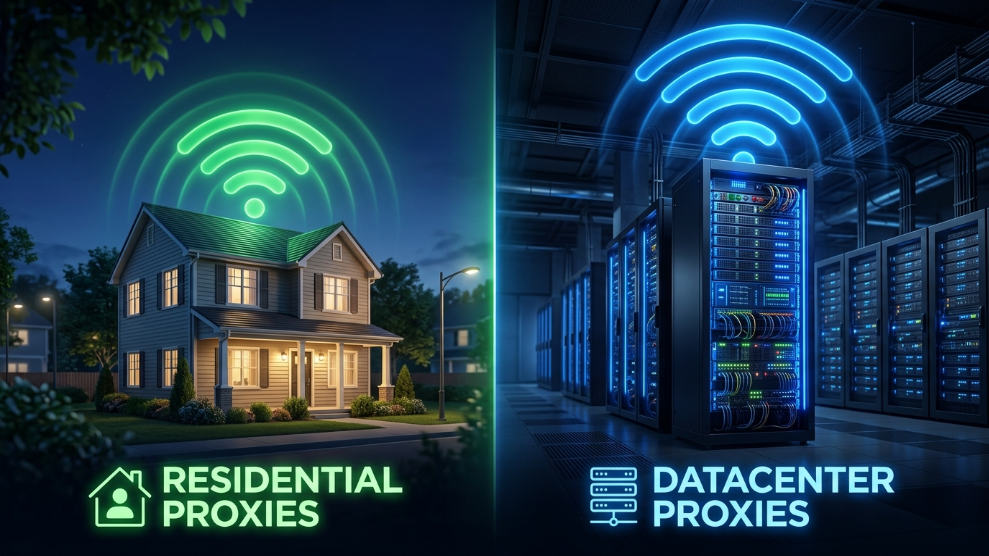
To solve this, media buyers use proxy servers. According to cybersecurity experts at Cloudflare, a proxy acts as an intermediary gateway, masking your actual IP address with a new one. But when you go to purchase proxies, you are faced with a massive debate: Should you buy Residential proxies or Datacenter proxies? Here is the definitive breakdown of which type you actually need for multi-accounting.
What are Datacenter Proxies?
Datacenter proxies are IP addresses that are generated and hosted by massive corporate data centers and cloud hosting providers (like Amazon Web Services or Google Cloud). They are not affiliated with traditional internet service providers (ISPs).
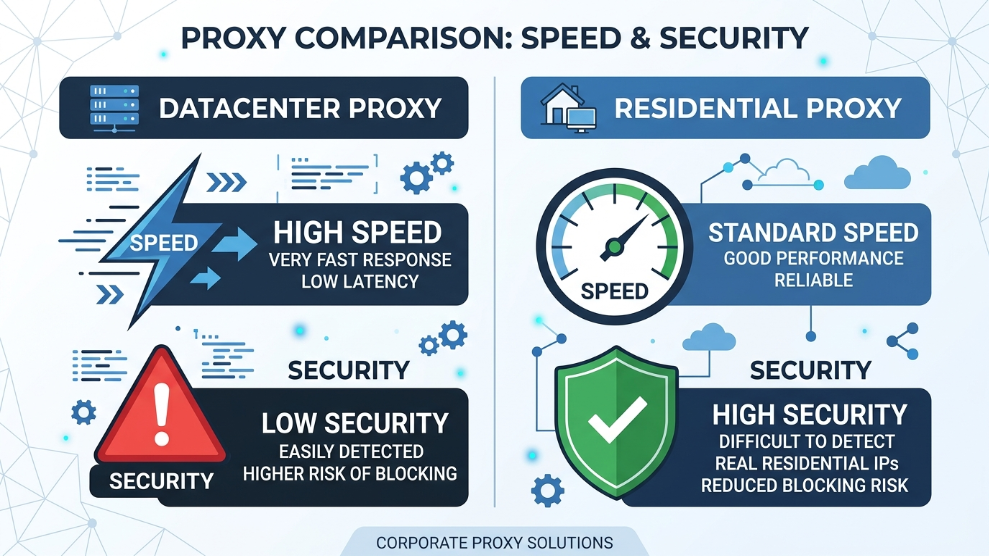
The Pros: Because these proxies operate on commercial fiber-optic networks, they are incredibly fast. If you need to scrape thousands of pages of data or run automated bots that require lightning-fast response times, datacenter proxies are unmatched. They are also significantly cheaper to purchase in bulk.
The Cons: The massive flaw with datacenter proxies is trust. When you log into Facebook or Amazon using a datacenter IP, the platform immediately knows it belongs to a server farm, not a regular household. Real human beings do not browse social media from an AWS server rack in the middle of a desert. Consequently, datacenter IPs are inherently flagged as “suspicious” by major platforms, leading to frequent captchas and instant account reviews.
What are Residential Proxies?
Residential proxies are actual, physical IP addresses assigned to regular homeowners by genuine Internet Service Providers (like AT&T, Comcast, or Verizon). When you route your traffic through a residential proxy, you are essentially borrowing a real person’s internet connection.
The Pros: The primary advantage of residential proxies is absolute trust. Because the IP address belongs to a real household, security algorithms treat the connection as a legitimate human user. This allows you to completely bypass strict geo-blocks and security filters on high-risk platforms like TikTok Ads or Google Ads without triggering algorithmic suspicion.
The Cons: They are more expensive than datacenter proxies, and because you are routing through consumer-grade internet connections, the speed can sometimes fluctuate.
The Verdict for Multi-Accounting
If your goal is to manage highly sensitive, revenue-generating assets like Facebook Business Managers or Amazon Seller accounts, the debate is over: You must use Residential Proxies. Using a cheap datacenter proxy to manage a high-value ad account is financial suicide. The algorithms are simply too smart, and the risk of a permanent ban is not worth the few dollars you save on the IP cost.
To make this workflow seamless, you need an environment that handles these connections flawlessly. Modern marketers use anti-detect software to pair each residential proxy with a unique hardware profile. For example, utilizing GoLogin allows you to easily paste your residential proxy credentials directly into the profile setup. The browser automatically tests the proxy connection and locks it to that specific digital identity, ensuring your real IP address never accidentally leaks if the proxy connection drops.
Final Thoughts
In the world of multi-accounting, trust is the most valuable metric. While datacenter proxies are excellent for raw web scraping and basic automation, they lack the human authenticity required to keep high-risk accounts alive. By investing in quality residential proxies and pairing them with a robust anti-detect browser, you build a resilient, ban-proof infrastructure that allows your digital business to scale without limits.

Munir is a digital security researcher and software reviewer
with over 5 years of experience testing privacy tools, parental
control applications, and cybersecurity software. He founded
Tech Monitor Pro to provide honest, hands-on reviews that help
families and professionals make smarter decisions about the
tools they use online. When he is not testing the latest VPN
or email verification platform, he writes practical guides on
digital safety and online privacy.