

Lead generation is the lifeblood of any modern business. You spend thousands of dollars on advertising, create an incredibly valuable free eBook or software trial, and drive traffic to your landing page. Users are filling out your opt-in form, and your database is growing rapidly.
But a few weeks later, when you send out your first promotional newsletter, your analytics reveal a disaster. A massive chunk of those new leads immediately bounced.
The culprit? Disposable email addresses. In 2026, internet users are highly protective of their primary inboxes. To avoid unwanted marketing emails, they frequently use temporary, burner accounts. While this protects the consumer, it actively destroys the sender. Here is exactly why disposable email addresses are ruining your campaigns and how you can stop them from entering your database.
What is a Disposable Email Address (DEA)?
A disposable email address (also known as a temporary or burner email) is a free, anonymously generated inbox that self-destructs after a short period of time—usually ranging from 10 minutes to a few days. Popular services like 10MinuteMail, Guerrilla Mail, or TempMail allow users to generate an address instantly.
Users utilize these temporary accounts to bypass “email-gate” restrictions. They enter the burner email, receive your free download or discount code, and then abandon the inbox forever.
Why DEAs Ruin Your Marketing Campaigns
Allowing temporary emails to flood your database is mathematically and technically devastating to your business.
1. The Inevitable Hard Bounce
Because burner emails self-destruct rapidly, any follow-up emails you send will result in a hard bounce. As we have previously covered, internet service providers (ISPs) track your bounce metrics closely. A sudden spike in hard bounces tells Google and Yahoo that you are not practicing proper list hygiene, leading directly to a ruined domain reputation.
2. Wasted Marketing Budget
Most Email Service Providers (ESPs) charge you based on the total number of contacts in your list. If 15% of your database consists of dead, temporary emails, you are paying a monthly premium to store useless data. Removing these fake leads is one of the easiest ways to improve your email marketing ROI.
3. Distorted Analytics
If your list is full of disposable emails, your open rates and click-through rates will appear artificially low. This makes it impossible for your marketing team to accurately gauge which subject lines or campaigns are actually resonating with real, human buyers.
How to Block Disposable Emails in 2026
The best way to handle disposable emails is to never let them into your system in the first place. You must transition from reactive list cleaning to proactive defense.
Real-Time API Blocking
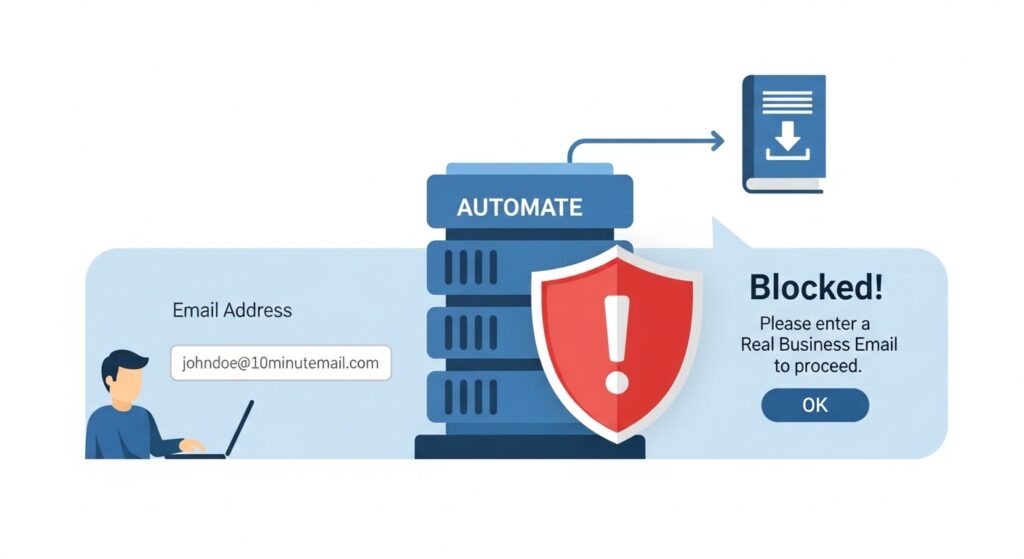
Instead of letting users submit a fake email and cleaning it later, you should embed an email verification API directly into your lead capture forms. When a user types in an email, the API pings a massive, constantly updated database of known disposable domains. If it detects a burner email, it prevents the user from clicking “Submit” and prompts them to enter a valid business address.
- For Cost-Effective Defense: If you are a startup or an affiliate marketer looking to implement this API on your WordPress site without breaking the bank, read our DeBounce review. DeBounce offers an incredibly lightweight, lightning-fast API specifically designed to block disposable emails in real-time. (Alternatively, you can explore our EmailListVerify review for another budget-friendly API option).
- For Enterprise Protection: If you run a large-scale SaaS company or B2B agency where security and AI-driven engagement scoring are paramount, check out our ZeroBounce review. Their enterprise-grade API ensures no toxic data ever breaches your CRM.
Conclusion
You work too hard to generate leads to let disposable email addresses ruin your campaigns. By understanding how these temporary accounts destroy your sender score and implementing powerful, real-time verification tools like DeBounce on your landing pages, you force users to provide their real contact information. This ensures your database remains pristine, your deliverability stays high, and your marketing budget is spent only on actual prospects.

Munir is a digital security researcher and software reviewer
with over 5 years of experience testing privacy tools, parental
control applications, and cybersecurity software. He founded
Tech Monitor Pro to provide honest, hands-on reviews that help
families and professionals make smarter decisions about the
tools they use online. When he is not testing the latest VPN
or email verification platform, he writes practical guides on
digital safety and online privacy.