

Imagine building an email list of 50,000 subscribers, crafting the perfect marketing campaign, and pressing send—only to find out the next day that your entire domain has been blacklisted. Your emails are no longer reaching your customers; they are being blocked at the server level by Gmail, Yahoo, and Outlook.
What went wrong? You likely stepped on a digital landmine known as a spam trap.
In 2026, Internet Service Providers (ISPs) and anti-spam organizations are more aggressive than ever. To catch malicious senders and marketers with poor list hygiene, they strategically place hidden traps across the internet. In this guide, we will explore the hidden dangers of spam traps, how they end up on your list, and the exact steps you must take to avoid them.
What is a Spam Trap?
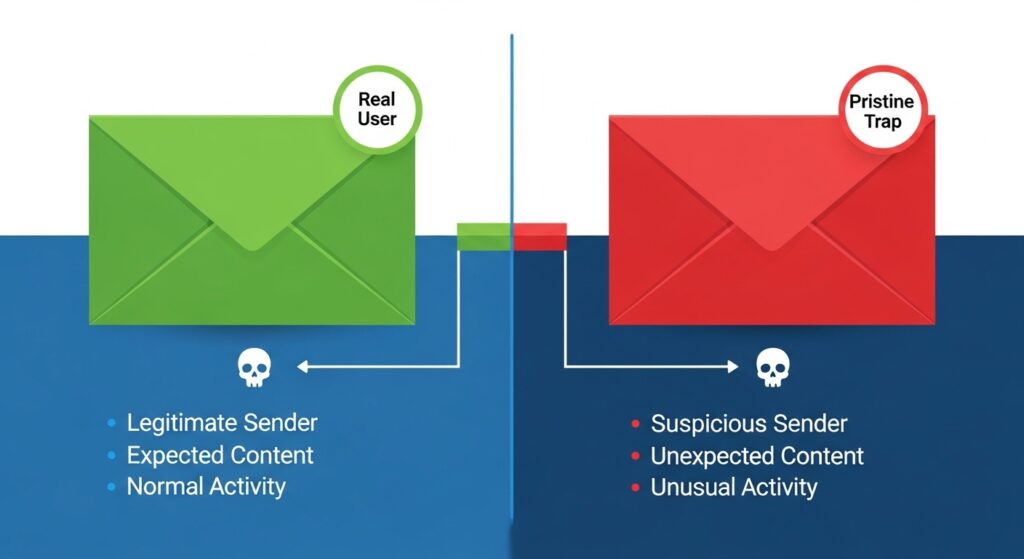
A spam trap (or honeypot) looks like a completely normal, valid email address (e.g., contact@business.com or john.doe@gmail.com). However, this address does not belong to a real person. It is actively monitored by an ISP or a blocklist operator like Spamhaus to catch senders who are scraping the web for emails or buying cheap, unverified lists.
Because these email addresses do not belong to real users, it is impossible for them to legally opt-in to your newsletter. Therefore, if you send an email to a spam trap, the ISP immediately knows you acquired that email illegitimately or failed to clean your aging database.
The Two Main Types of Spam Traps
To fully understand the dangers of spam traps, you need to know how they are created. They generally fall into two categories:
1. Pristine Spam Traps
These are email addresses created by ISPs that have never been used by a real person. They are intentionally hidden in the background code of public websites. Normal users will never see them, but automated bots that scrape websites for emails will harvest them. If you buy a cheap list of 10,000 “B2B Leads,” it is highly likely it contains pristine traps. Hitting just one pristine trap can result in an instant, permanent domain blacklist.
2. Recycled Spam Traps
These are old, abandoned email addresses that used to belong to real people. After a period of inactivity (usually 6 to 12 months), the ISP reclaims the address and turns it into a trap. If you are emailing a recycled trap, it tells the ISP that you are not practicing good list hygiene and are still emailing people who haven’t engaged with you in over a year.
The Devastating Impact on Your Business
Hitting a spam trap does not just result in a bounced email. The consequences are severe and long-lasting:
- Domain Blacklisting: Your sending domain and IP address will be added to public blocklists. Once blacklisted, all major email clients will aggressively filter your messages.
- Destroyed Sender Reputation: Your sender score will plummet. Even if you remove the trap later, it takes months of consistent, high-quality sending to rebuild trust with ISPs.
- Massive Revenue Loss: If your promotional emails, password resets, and order confirmations are going to the spam folder, your digital marketing ROI drops to zero.
How to Avoid Spam Traps in 2026
The only way to survive in the modern email marketing landscape is proactive defense. Here is how you keep your database completely trap-free.
1. Clean Your List with Advanced Verification
Never send an email to a newly acquired list without verifying it first. Advanced email verification tools cross-reference your list against known databases of spam traps and toxic domains, removing them before you ever hit send.
For the most cost-effective and highly reliable solution, we highly recommend reading our DeBounce review. DeBounce is our #1 pick because it aggressively filters out toxic emails and disposable addresses at a fraction of the cost of its competitors.
If you are an enterprise agency that needs heavy-duty, AI-driven toxicity checks to identify highly sophisticated traps, our ZeroBounce review breaks down the industry’s most premium defense system.
2. Never Buy Email Lists
We cannot stress this enough: buying a list of emails is the fastest way to ruin your business. Scraped lists are the primary source of pristine spam traps. Always build your list organically through high-quality lead magnets and landing pages.
3. Enforce Double Opt-In
A double opt-in process requires users to click a confirmation link sent to their inbox before they are added to your active list. Since a spam trap is not operated by a real human, it cannot click the confirmation link. This guarantees that zero traps can artificially enter your database through your forms.
Conclusion
The dangers of spam traps are very real, and ISPs show zero mercy to marketers who hit them. By understanding how these honeypots work, utilizing powerful validation tools like DeBounce to scrub your lists, and strictly adhering to organic lead generation, you can safeguard your domain reputation and ensure your campaigns remain profitable.

Munir is a digital security researcher and software reviewer
with over 5 years of experience testing privacy tools, parental
control applications, and cybersecurity software. He founded
Tech Monitor Pro to provide honest, hands-on reviews that help
families and professionals make smarter decisions about the
tools they use online. When he is not testing the latest VPN
or email verification platform, he writes practical guides on
digital safety and online privacy.