

In the Web3 ecosystem, early adopters are heavily rewarded. When a new blockchain network or decentralized finance (DeFi) protocol launches, developers often distribute free tokens to their early users to bootstrap liquidity and test the network.
According to the official CoinMarketCap glossary, an airdrop is a marketing stunt that involves sending free coins or tokens to wallet addresses. While an average user might earn $500 from interacting with a protocol using one wallet, professional “farmers” multiply this effort. They manage 50 or 100 different wallets to turn a single airdrop event into life-changing capital.
Historically, airdrop farming was strictly a desktop operation. However, with the explosion of mobile-exclusive Web3 dApps (decentralized applications) and “Tap-to-Earn” Telegram games, farmers must adapt to mobile infrastructure. Here is the ultimate technical setup for securely executing crypto airdrop farming on mobile devices.
The Mobile Anti-Sybil Threat
Blockchain protocols are not stupid. They want to reward 50,000 unique human beings, not one person operating 50,000 bots. To enforce this, they use “Anti-Sybil” security filters.
On a desktop, you can bypass these filters using specialized anti-detect browsers. However, mobile apps deploy much deeper hardware checks. If an airdrop app detects that 50 different wallets are interacting with their smart contract from the same device ID, the same local IP address, or via a known desktop emulator (like BlueStacks), they will instantly blacklist all your wallets.
To survive mobile Sybil checks, you need an infrastructure that perfectly mimics dozens of unique, physical smartphones.
Step 1: Deploy a Cloud Phone Fleet
You cannot farm mobile airdrops safely on your personal iPhone. You also cannot scale efficiently by buying a stack of 50 cheap Android devices, as managing the physical batteries and Wi-Fi connections is an operational nightmare.
The professional solution is to deploy a fleet of virtual cloud phones. By renting virtual Android instances, you gain access to 50 completely isolated operating systems. Each cloud phone possesses a unique IMEI number, Android Build ID, and hardware metric. To the Web3 protocol’s tracking script, your 50 cloud instances look exactly like 50 physical human beings holding 50 different smartphones.
Step 2: Utilize Synchronous Group Control
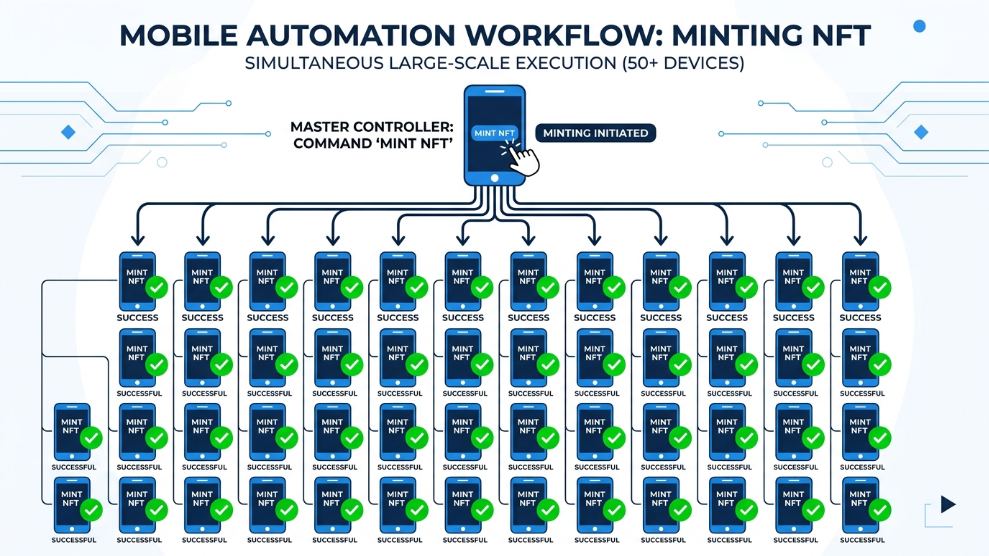
If you have 50 cloud phones running, how do you perform the necessary airdrop interactions—like bridging testnet tokens, minting an NFT, or swapping assets—across all of them? Doing it manually, one by one, would take days.
This is where specialized platforms like BitBrowser Cloud Phone become invaluable. BitBrowser features a tool known as “Synchronous Group Control.”
You simply designate one cloud phone as the master device and group the other 49 phones underneath it. When you open the MetaMask app, type in a transaction amount, and click “Confirm” on the master phone, the software instantly replicates those exact touchscreen commands across all 49 slave phones. You can farm a complex DeFi protocol across 50 wallets in the exact same time it takes to farm just one.
Step 3: Enforce Network Isolation
Hardware isolation is useless if your network data leaks. If 50 unique cloud phones execute a smart contract transaction from the exact same data center IP address, the airdrop protocol will flag you for a Sybil attack.
Before you launch your cloud phones, you must assign a dedicated residential proxy to each individual instance. This ensures that every single wallet interacts with the blockchain using a clean, household IP address from a different geographic location.
Final Thoughts
Mobile airdrop farming is rapidly becoming one of the most profitable sectors in crypto, but the barrier to entry requires strict technical discipline. By abandoning physical hardware and utilizing cloud Android environments paired with synchronous group control and residential proxies, you can safely scale your farming operations, bypass aggressive Anti-Sybil filters, and maximize your airdrop allocations.

Munir is a digital security researcher and software reviewer
with over 5 years of experience testing privacy tools, parental
control applications, and cybersecurity software. He founded
Tech Monitor Pro to provide honest, hands-on reviews that help
families and professionals make smarter decisions about the
tools they use online. When he is not testing the latest VPN
or email verification platform, he writes practical guides on
digital safety and online privacy.