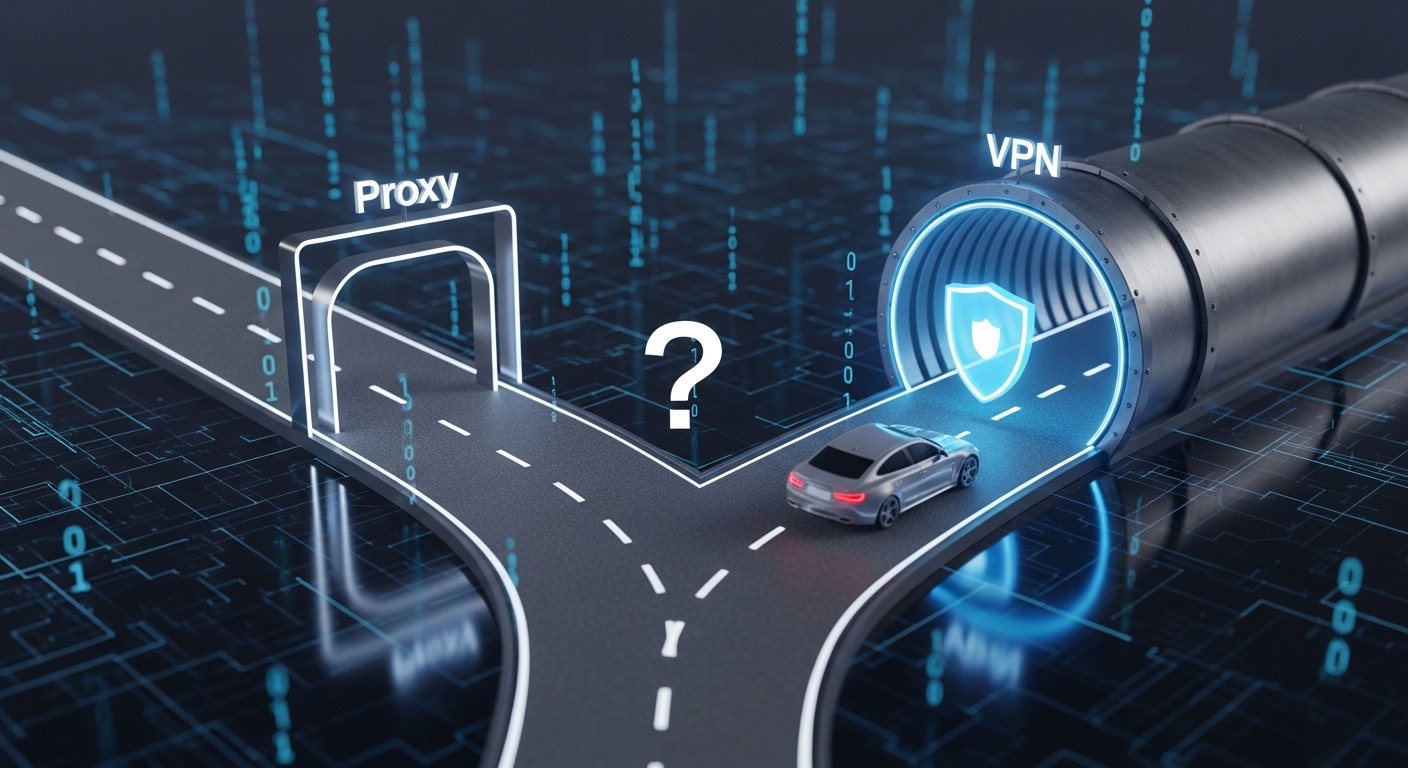
In 2026, the internet is no longer a private space. Every website you visit, every ad you click, and every search query you type is being tracked, logged, and sold to the highest bidder. Whether you are trying to bypass a geo-restriction to watch a show, or you simply want to hide your IP address from prying eyes, you have likely encountered two different solutions: Proxies and VPNs.
At first glance, they seem to do the exact same thing. Both tools sit between your computer and the internet, masking your real identity and making it appear as if you are browsing from a different location.
However, underneath the surface, these two technologies are fundamentally different. Choosing the wrong one can leave your data exposed to hackers on Public Wi-Fi networks or slow your connection to a crawl.
In this guide, we will dive into the proxies vs vpns debate. We will explain the technical mechanics of each, highlight their pros and cons, and help you decide which one is the right fit for your specific privacy needs.
Proxies vs VPNs: The Core Difference
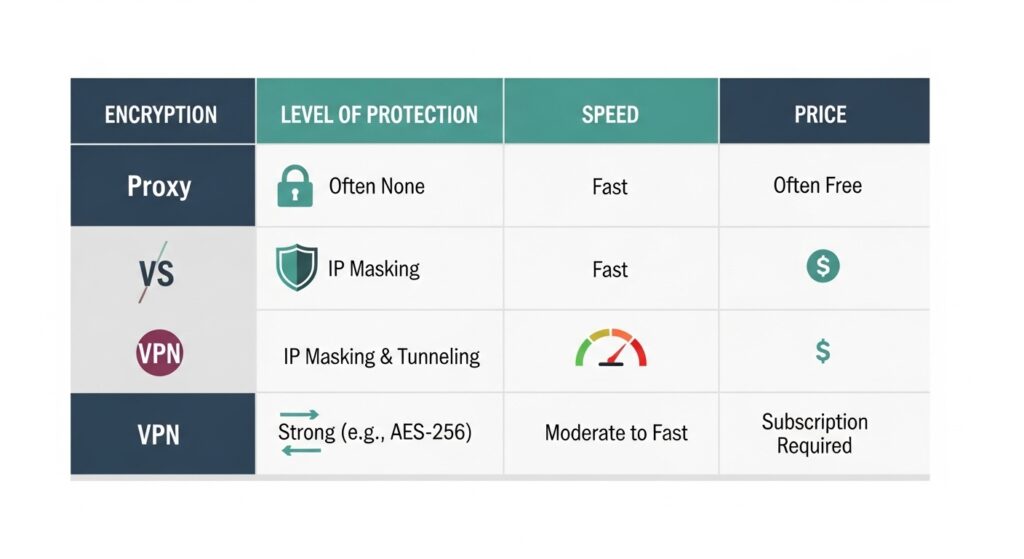
The simplest way to understand the difference is to look at Encryption and Scope.
What is a Proxy?
A proxy is like a digital mask. When you use a proxy, only the traffic from a specific application (like your web browser) is routed through an intermediate server. The proxy changes your IP address, but it does not encrypt your data. * Analogy: A proxy is like wearing a fake mustache. People might not recognize your face, but if they follow you home, they can still see everything you are doing.
What is a VPN?
A Virtual Private Network (VPN) is like a secure, armored tunnel. Instead of just masking one app, a VPN encrypts all the traffic leaving your device—your browser, your email, your background apps, and your system updates.
- Analogy: A VPN is like driving an armored car through a private tunnel. Nobody knows who is inside, where you are going, or what you are carrying.
When to Use a Proxy
Even though they lack encryption, proxies have specific use cases where they actually outperform VPNs.
- Bypassing Geo-Blocks: If you just want to access a website that is blocked in your country, a proxy is a fast and lightweight solution.
- Web Scraping & Automation: Developers often use thousands of proxies to gather data from the web without getting their main IP address banned.
- Speed: Because there is no heavy encryption process, a high-quality proxy is usually faster than a VPN for simple tasks like streaming video.
When to Use a VPN
For 99% of people concerned about security, a VPN is the superior choice in the proxies vs vpns debate.
- Security on Public Wi-Fi: If you are working at a cafe, a VPN is mandatory. It prevents hackers from sniffing your passwords or intercepted your sensitive data.
- Parental Oversight: If you are using parental monitoring apps like Parentaler or mSpy, using a VPN on your parent device ensures that the logs you are viewing are not being intercepted by your ISP or local network administrators.
- Total Anonymity: If you want to stop your Internet Service Provider (ISP) from seeing your browsing history, only a VPN can provide that level of total encryption.
Conclusion: Which One Should You Choose?
In the contest of proxies vs vpns, your choice depends on your goal. If you just need a temporary IP address to visit a website, a proxy is fine. But if you care about your passwords, your bank details, and your long-term digital privacy, a VPN is a non-negotiable tool.
Don’t leave your data exposed. Invest in a reputable VPN service, use strong password managers, and browse with the confidence that your digital life is under your control.

Munir is a digital security researcher and software reviewer
with over 5 years of experience testing privacy tools, parental
control applications, and cybersecurity software. He founded
Tech Monitor Pro to provide honest, hands-on reviews that help
families and professionals make smarter decisions about the
tools they use online. When he is not testing the latest VPN
or email verification platform, he writes practical guides on
digital safety and online privacy.