
You have spent weeks crafting the perfect email copy, designing a beautiful layout, and setting up your automation funnel. You hit “Send” to your list of 10,000 subscribers, expecting a flood of opens and conversions. Instead, your analytics dashboard lights up with a terrifying metric: hundreds of your emails never reached their destination. They bounced.
In the highly regulated digital marketing landscape of 2026, internet service providers (ISPs) like Google, Yahoo, and Outlook are more aggressive than ever. They monitor how senders behave, and a high bounce rate is the fastest way to get your domain permanently blacklisted.
If you want your emails to actually reach the inbox, you need to understand what an email bounce rate is, why it happens, and exactly how to fix it.
What Exactly is an Email Bounce Rate?
Simply put, an email bounce rate is the percentage of addresses in your subscriber list that did not receive your message because it was returned by the recipient’s mail server.
The formula is straightforward: (Total Number of Bounced Emails ÷ Total Number of Emails Sent) x 100 = Bounce Rate %
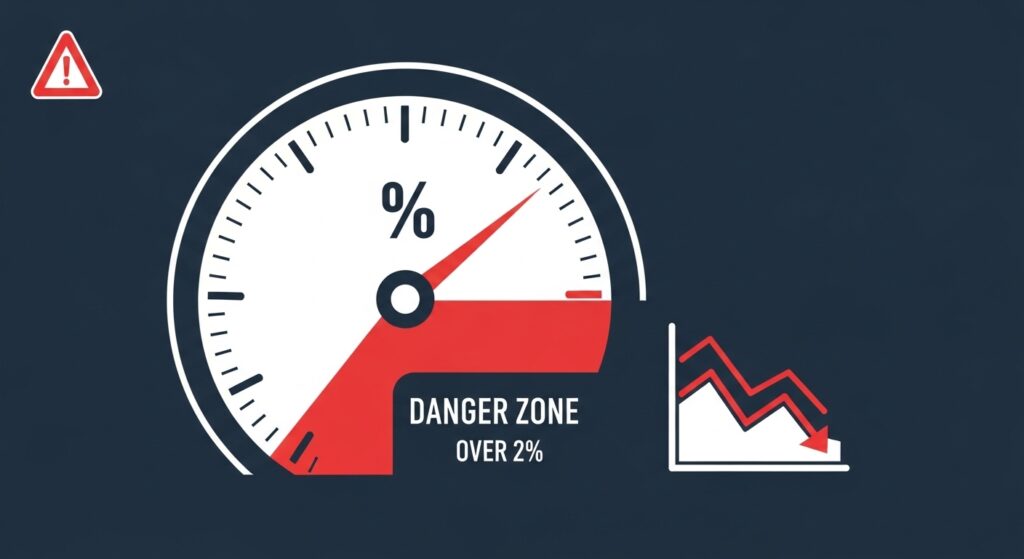
According to strict industry standards outlined by major providers like Google Postmaster Tools, a healthy bounce rate should consistently remain under 2%. If your bounce rate creeps up to 5% or higher, your sender reputation will plummet, and even your legitimate emails will be routed directly to the spam folder.
Why Do Emails Bounce? (Hard vs. Soft Bounces)
Not all bounces are created equal. They generally fall into two distinct categories:
- Soft Bounces (Temporary Issues): This happens when an email address is valid, but the message is temporarily rejected. This could be because the recipient’s inbox is completely full, their mail server is currently down, or your email file size is too large. Usually, your email service provider will attempt to resend soft bounces automatically.
- Hard Bounces (Permanent Failures): This is the dangerous category. A hard bounce occurs when the email address is entirely invalid. The domain name might not exist, the user might have deleted their account, or it could be a fake email address filled with typos (e.g., john@gmaill.com). Continuing to send messages to hard bounces tells ISPs that you are a spammer who does not practice good list hygiene.
4 Actionable Ways to Reduce Your Bounce Rate in 2026
Protecting your domain reputation requires proactive defense. Here are the most effective strategies to keep your bounce rate near zero.
1. Use a Premium Email Verification Tool
The absolute most effective way to eliminate hard bounces is to clean your list before you ever press send. Email verification software scans your entire list and identifies fake, inactive, or disposable email addresses so you can delete them. If you are looking for an affordable, highly accurate solution, reading our comprehensive DeBounce review is the best place to start. For enterprise-level needs, platforms like ZeroBounce utilize AI to score email toxicity.
2. Implement Double Opt-In
A single opt-in process allows anyone to type anything into your lead capture form. A double opt-in process requires the user to click a confirmation link sent to their inbox before they are officially added to your list. This guarantees that every single address on your database is 100% real and actively monitored by the user.
3. Never Purchase Cheap Email Lists
Buying a list of 50,000 emails for $50 might sound like a great shortcut to scaling your business, but it is a massive trap. These scraped lists are notoriously filled with dead emails and “spam traps”—addresses created specifically by ISPs to catch bad senders. Building your list organically takes longer, but it is the only sustainable method in 2026.
4. Authenticate Your Sending Domain
If your emails look suspicious to a receiving server, they will bounce them back to protect their users. You must prove your identity by properly setting up your SPF (Sender Policy Framework), DKIM (DomainKeys Identified Mail), and DMARC records in your DNS settings. This acts as a digital passport, proving to ISPs that you are an authorized sender for your domain.
Conclusion
Your email bounce rate is not just a passive metric; it is the heartbeat of your domain’s reputation. By practicing relentless list hygiene, utilizing verification tools like EmailListVerify, and employing double opt-in strategies, you can ensure your campaigns bypass the spam folder and land directly in front of your target audience.

Munir is a digital security researcher and software reviewer
with over 5 years of experience testing privacy tools, parental
control applications, and cybersecurity software. He founded
Tech Monitor Pro to provide honest, hands-on reviews that help
families and professionals make smarter decisions about the
tools they use online. When he is not testing the latest VPN
or email verification platform, he writes practical guides on
digital safety and online privacy.